




Overview of Research Program
Psychedelics as Catalysts for Health Behavior Change
Understanding what changes and for whom
- Health behavior change across domains (e.g., substance use, diet, lifestyle, functioning)
- Comparisons with general population health markers
- Microdosing as a distinct pathway for change
- Qualitative and longitudinal evidence of change processes
Context, Social Dynamics & Lived Experience
Understanding how and why change happens
- Ceremonial, digital, and group contexts
- Relational and shared experiences
- Practitioner perspectives and facilitation
- Subjective experiences (e.g., mystical-type experiences)
Advancing Methods for Real-World Psychedelic Research
Understanding how to study these phenomena rigorously
- Development of naturalistic research methodologies
- Systematic and scoping reviews of real-world studies
- Validation of measurement tools
- Integration of quantitative and qualitative approaches
Mantras Coliseu: conversa sobre as substâncias psicadélicas em Portugal
Viagem aos psicadélicos: novas terapias e horizontes pessoais? | Praça da Fundação
Pedro Teixeira Insight 2023 - Behavioral Psychedelics
Selected Publications
News
Pedro Teixeira Presents Latest Psychedelic Health Behavior Research at Leading International Conference
Pedro Teixeira, coordinator of the Behavioral Regulation group at CIPER - Behavioral Regulation, participated in ICPR 2026, one of the world’s most prominent conferences in psychedelic science, presenting data from two of his group’s most recent publications, including Health Behavior Change Following Naturalistic Psychedelic Use: Results from Users and Practitioners.
The presentation focused on emerging empirical findings on how naturalistic psychedelic experiences may be associated with changes in health-related behaviours, drawing on complementary datasets from both users and practitioners.
The work contributed to ongoing international discussions on the intersection between psychedelics, behaviour change, and public health, reinforcing the group’s position within this rapidly evolving field of research.

Jorge Encantado Presents Psychedelics Research at ISBNPA 2026 in Cádiz
Jorge Encantado, a researcher at the CIPER - Behavioral Regulation, had an active presence at the internationally recognized ISBNPA Annual Meeting, held in Cádiz at the end of May.
During the conference, he presented two studies currently in the pipeline for publication and facilitated a DARE2SHARE session designed to provide a more in-depth overview of the research line developed within his group, led by Pedro Teixeira: Psychedelics and Health Behavior Change.
Although this topic represents a novel and emerging area within behavioral science conferences, it was well received by attendees, generating substantial engagement, questions, and interest in future collaboration opportunities.
Pedro Teixeira takes behavioural science to Portugal's landmark psychedelics symposium
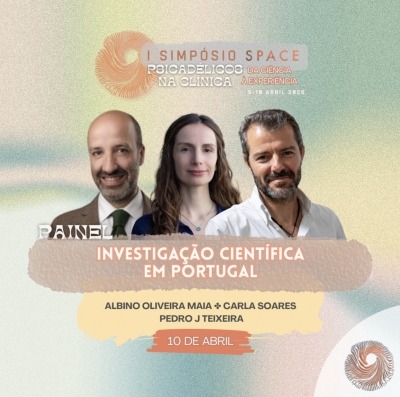
The first SPACE Symposium — organised by the Sociedade Portuguesa de Aplicação Clínica de Enteógenos — brought together researchers, clinicians, and health professionals from across Portugal on 9–10 April 2026, at the Fundação Manuel António da Mota Auditorium in Porto, under the theme Psychedelics in the Clinic: from Science to Experience. Pedro J. Teixeira, professor at the Faculty of Human Kinetics of the University of Lisbon (FMH) and leader of the Behavioural Regulation research group at CIPER, delivered a presentation on the psychological mechanisms underlying health behaviour change mediated by psychedelic experiences.
Pedro Teixeira presents talk on psychedelic education at TEDx Lagos
Researcher and professor Pedro Teixeira participated in TEDx Lagos, where he delivered a talk on psychedelic science and its role in contemporary mental health and behavioural studies. In his presentation, Teixeira discussed how substances such as psilocybin and DMT are being investigated for their potential to promote psychological insight and well-being when used in structured, therapeutic contexts.
Drawing on recent scientific findings, he addressed the importance of education, ethical frameworks, and public literacy in shaping future psychedelic-assisted care and research in Portugal and beyond.

Pedro Teixeira Explored Psychedelics and Public Health at INSIGHT Forum
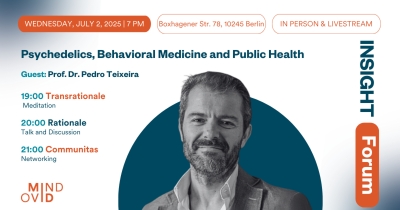
On July 2, 2025, the MIND Foundation hosted an INSIGHT Forum in Berlin under the theme Psychedelics, Behavioral Medicine and Public Health. As part of the Rationale segment, Professor Pedro Teixeira presented recent findings at the intersection of psychedelics and health behavior change.
In his talk, Teixeira discussed how psychedelic experiences — even those occurring outside clinical or research settings — have been associated with sustained improvements in lifestyle behaviors such as physical activity, diet, sleep, and social connection. He highlighted how these “non-clinical” benefits may contribute to public health and invited reflection on how health systems might responsibly integrate such evidence.
The forum combined mindfulness and embodiment practices with scientific discussion, fostering dialogue between researchers, clinicians, and the broader community about the transformative potential of psychedelics for human well-being.
Pedro Teixeira Discusses Psychedelics and Public Health at Santiago Symposium
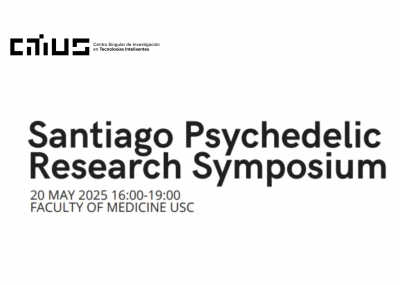
Professor Pedro Teixeira, principal investigator at the CIPER - Behavioral Regulation Group, was one of the invited speakers at the Santiago Psychedelic Research Symposium, held on May 20, 2025, at CiTIUS – University of Santiago de Compostela.
In his talk, titled “Psychedelics and Public Health,” Teixeira explored emerging evidence on how psychedelic experiences may promote lasting improvements in key health behaviors such as physical activity, diet, sleep, and meditation. He emphasized that beyond their clinical applications, psychedelics might act as catalysts for deeper motivation, self-regulation, and behavioral change — areas closely aligned with his ongoing research in health psychology and self-determination theory. Teixeira’s participation reflects the growing international engagement of Portuguese researchers in this evolving interdisciplinary field, where psychology, neuroscience, and public health converge to better understand the transformative potential of psychedelic experiences.